
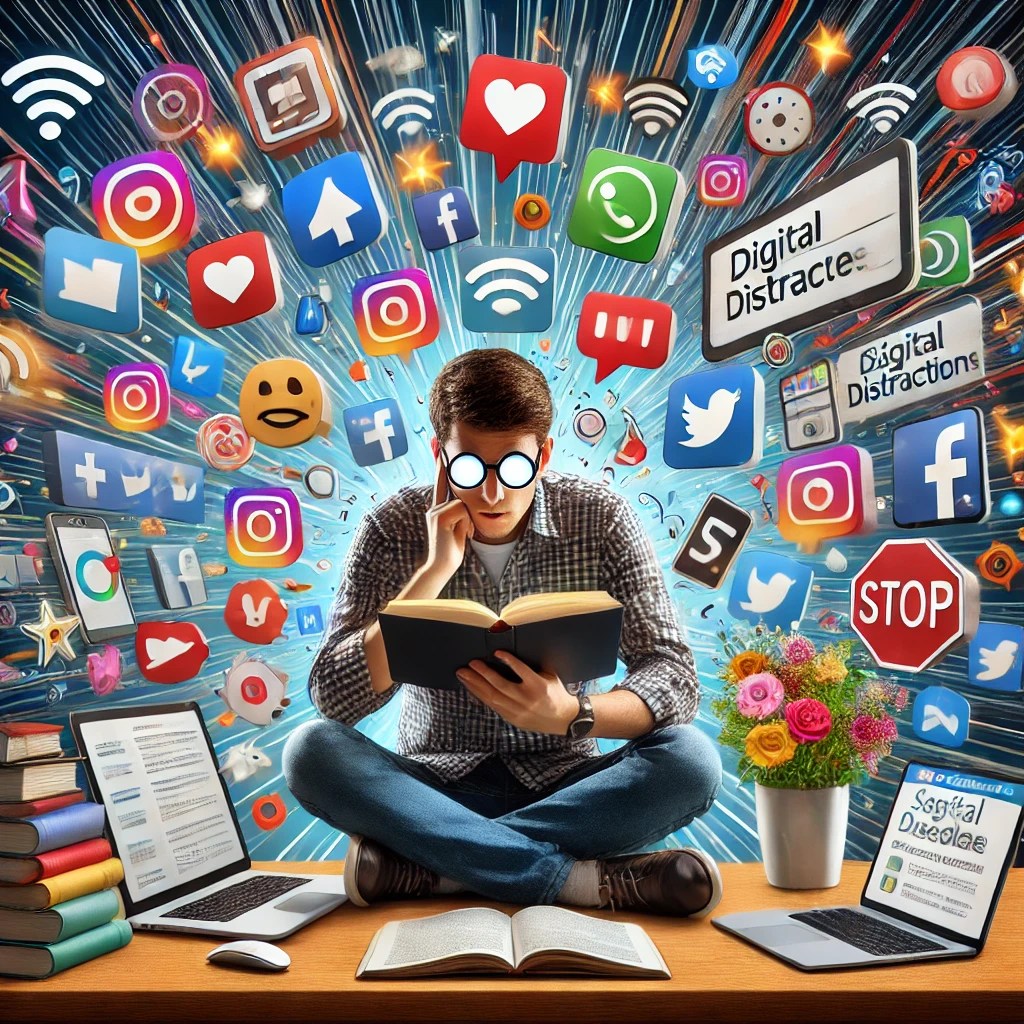
In today’s world, it seems like we’re constantly juggling a thousand things at once. Our devices are always buzzing, our social media feeds are overflowing, and we’re frequently pulled in multiple directions. As a result, it’s no surprise that many of us find it increasingly difficult to focus for extended periods. The digital age, with its endless streams of information and constant notifications, has profoundly changed how we process information, and the science behind this decline in attention span is both fascinating and concerning.
Our brains are not equipped to handle the level of constant stimulation that modern technology provides. In the past, human attention was largely governed by the need to focus on one thing at a time—whether it was hunting for food or listening to a conversation. However, in the digital age, our brains are constantly switching gears. Studies have shown that the average attention span has decreased dramatically over the past few decades. According to a 2015 study by Microsoft, the human attention span has fallen to just 8 seconds, down from 12 seconds in the year 2000. To put this in perspective, a goldfish supposedly has an attention span of 9 seconds—making it difficult to ignore how technology has reshaped our ability to focus.
One of the major culprits in this decline is the design of modern technology itself. Social media platforms, like Instagram, Facebook, and TikTok, thrive on delivering quick, attention-grabbing content. Every swipe, click, and like reinforces the brain’s reward system with a hit of dopamine, creating a cycle of instant gratification. This constant bombardment of information can make it difficult to concentrate on tasks that require deep, focused thinking. A perfect example of this can be seen in the way people consume news today—scrolling quickly through headlines, barely pausing to absorb details before moving on to the next piece of information. In contrast, reading a lengthy article or engaging in thoughtful conversation requires sustained attention, a skill that’s slowly being undermined by our tech-centric lifestyles.
The brain, in turn, becomes conditioned to expect this kind of fast-paced, fragmented information. This is why you might find yourself getting distracted while trying to read a book or complete a work task, even if it’s something you enjoy. Our brains are not just multitasking—they’re switching between tasks at lightning speed, which exhausts cognitive resources and reduces our capacity for focus. This phenomenon is known as “task switching,” and while we may think we’re being more productive, studies have shown that constant task switching can actually decrease efficiency and increase mental fatigue. It’s not just about managing multiple tasks—it’s about how frequently we shift our attention that impacts cognitive performance.
Interestingly, not all forms of digital engagement are equally damaging to our attention span. Research has found that engaging in activities like video gaming or watching action-packed TV shows can provide short-term improvements in certain cognitive skills, like reaction time and spatial awareness. However, these activities are often less demanding in terms of long-term, focused attention. In contrast, activities like reading, solving puzzles, or engaging in deep conversation can help maintain and even improve attention span. The key difference is the level of focus and mental effort required.
So, what can we do to combat this attention crisis? One solution may lie in finding a balance between the digital and the analog. In my own experience, incorporating mindfulness practices like meditation and simply taking breaks from screen time can help restore focus. Additionally, implementing the “single-tasking” approach—focusing on one task at a time rather than attempting to juggle multiple tasks—can be surprisingly effective in sharpening attention. Creating a distraction-free environment, turning off notifications, and setting designated “deep work” hours are other strategies that can help mitigate the effects of digital overload.
In conclusion, while technology has undoubtedly brought about numerous benefits, it has also reshaped the way our brains function, making it harder than ever to maintain a sustained focus. The key to navigating this new reality lies in becoming more aware of how technology is affecting our cognitive abilities and intentionally designing our environments to foster better focus. By understanding the science behind attention and applying strategies to improve our mental habits, we can regain control over our attention spans in an increasingly distracted world.

 The Thought Box
Leave a comment